Energy
Energy use is one of our most significant environmental impacts.
Energy at Â鶹´«Ã½
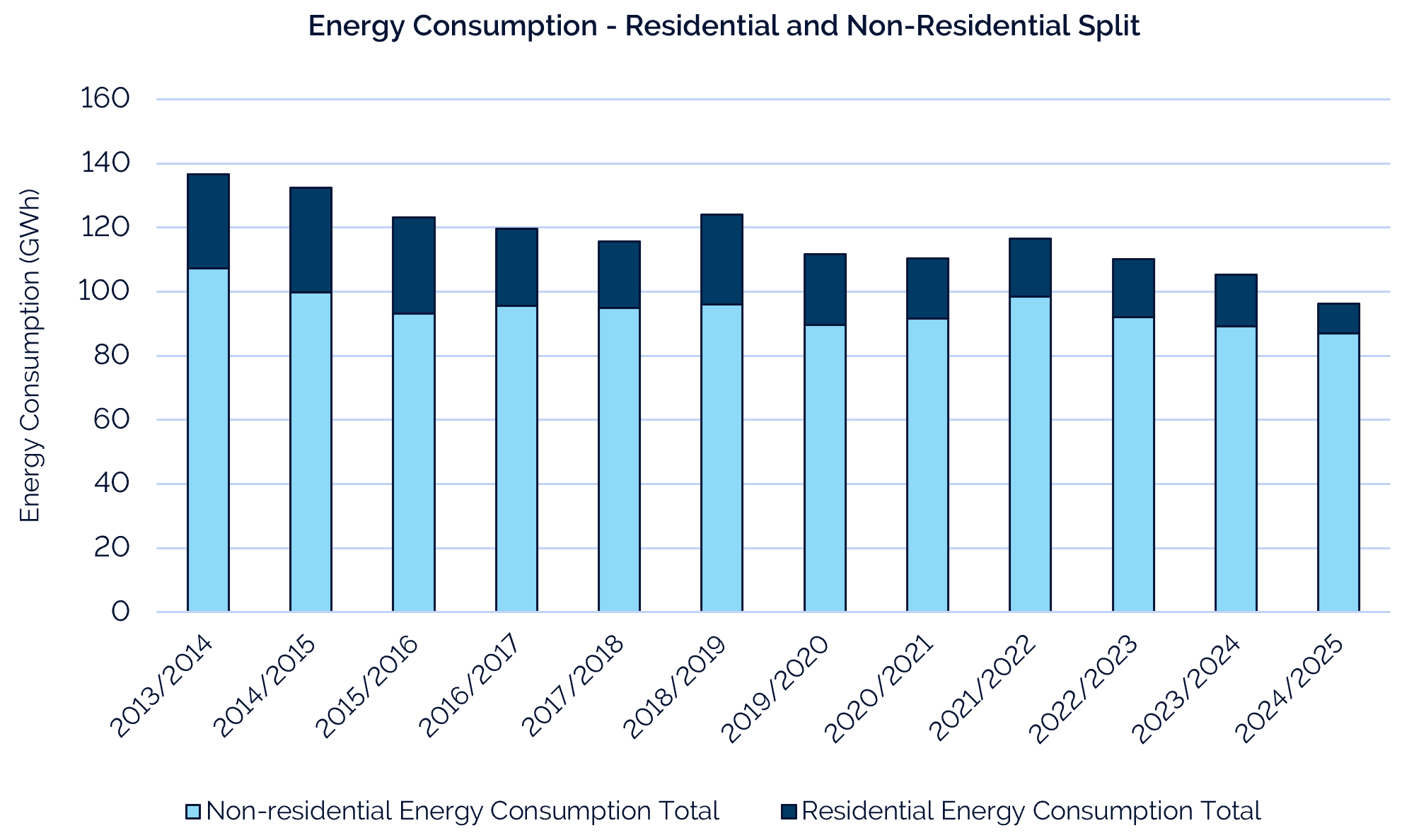
Â鶹´«Ã½ requires significant energy to support teaching, research, and day-to-day operations across its estate. For the 2024/25 academic year the University consumed over 96 million kWh of energy in the form of heating, cooling and power. We are working to reduce this figure year on year through energy efficiency improvements, increasing our renewable generation assets, and by changing behaviours to encourage energy savings. This work will contribute towards achieving our net zero by 2030 goal.
Read on for advice on for how you can help reduce energy consumption across campus. You can also email the Sustainability Team to report energy wastage on campus.
Sorry, you need JavaScript to view this video
Solar PV on Campus
To increase our share of renewable electricity we have installed 31 solar photovoltaic (PV) arrays across our campus with a combined installed capacity exceeding 2.5MW.
Generating electricity through solar PV reduces our reliance on the UK’s grid electricity, which although is becoming increasingly powered by renewable sources (solar and wind), does still have a share of natural gas which has associated carbon emissions.
In 2025 the University’s solar generation was over 1,000MWh, avoiding over 200 Tonnes CO2e from using UK grid electricity.
Watch the video above to learn how our solar PV systems work and discover more about the latest phase of the University's solar installation programme.
Energy Saving Actions - Get Involved
Effective energy management is an important step toward achieving the goal of net zero by 2030. The utilisation of energy saving practices within offices and academic teaching and learning rooms plays a key role towards embedding them within the University.
Green Impact is a colleague engagement programme which encourages energy saving and efficiency measures, providing tips and advice to help embed good practice across the University. For more information about the programme and how to get involved please visit our colleague action page.
Energy Saving Tips:
- Turn off your PC and monitors at the end of the day. A standard PC with one monitor uses around 140 watts of energy per hour when switched on, 42 watts when in standby, and only 5 watts when shut down
- For areas without automatic controls ensure that lights are switched off when not required. Utilise natural light for spaces where possible, and ensure that broken lighting is reported promptly
- It may be useful to discuss who is usually last in the office and establish responsibility for turning off lights at the end of the day. Additionally, labelling banks of light switches can reduce energy use by assisting colleagues in only using the lights they need
- Dress for thermal comfort:
- As we all feel cold to different degrees, a great way to maximise personal comfort is to wear the most appropriate clothing for you
- Familiarise yourself with your local heating controls
- Some office radiators have thermostatic radiator valves (TRVs) which you can alter
- Do not use portable electric heaters
- Electric heaters are not only expensive to run but are also responsible for greater CO2 emissions. They can also inadvertently interfere with Building Management System sensors, impacting the wider heating within your workspace
- Ensure that heating and cooling systems are not running at the same time and close doors and windows when the heating or cooling system is on
Report the following issues to Estates and Facilities on ext. 87171 or ess-helpdesk@newcastle.ac.uk
-
- If your work area is too cold (typically lower than 19°C)
- If you think there may be a fault with the heating or cooling systems in your area
- Doors and windows that do not seal correctly when closed
Laboratory Energy Saving Actions - Get Involved
Our technical spaces, including natural and medical science laboratories and engineering workshops, utilise high energy specialist equipment, such as fume cupboards, drying cabinets, and freezers.
LEAF is an engagement programme available to lab groups across the University, providing a framework to embed sustainability. Further information and how to get involved can be found on our colleague action page.
Lab Energy Saving Tips:
- Turn off equipment when it is not being used. This is especially important over periods of prolonged leave, such as weekends and holidays
- A traffic light sticker system helps identify equipment that can be switched off after use (green), equipment that you need to ask lab users before switching off (yellow), and equipment that should not be switched off (red)
- If your lab has a fume cupboard, encourage users to close the sash when possible.
- When procuring new equipment look at purchasing more energy efficient models
- Bulk ordering reduces the energy required for multiple deliveries. It can also save you money
Heating and cooling
Managing conditions inside our buildings is important to campus users, the maintenance of our estate, and the environment. The University spends in excess of £5 million on heating and cooling buildings annually.
- Our buildings are equipped with sensors and automatic heating and cooling systems to keep conditions at the required comfort levels.
- Comfort cooling should not be set to come on below 25°C
- We are investing in a number of energy saving projects, including a programme of control upgrades that will make the existing systems more efficient.
More detail can be found in the Heating and Cooling Policy for Non-Residential Buildings (PDF: 229KB) for academic, research and office buildings. For student accommodation, see the link to the Residences Heating Policy under Policy Information.
Energy performance of campus buildings
Display Energy Certificates (DECs) are designed to show the energy performance of public buildings. They use a scale that runs from 'A' to 'G' - 'A' being the most efficient and 'G' being the least.
You can check the DECs and related recommendation reports for University campus buildings on the . Please note, the website also shows expired as well as valid certificates for some buildings.