Computer Science MPhil, PhD
- Typical entry requirements
- View full entry requirements
- Course delivery
- On Campus
Course information for entry year:
Overview
Join us for your MPhil or PhD in Computer Science. Your research will be supported by an experienced computer scientist within a research group and with the support of a team of advisers.
Research excellence
We are leading on several initiatives of national and international significance:
- EPSRC Northern Health Futures (NortHFutures) Hub (since 2023)
- EPSRC National Edge AI Hub (since 2024)
We are also collaborating with our regional partners on major consortium projects such as the EPSRC £2.5m investment in the North East Space Communications Accelerator (NESCA). This is a collaboration between:
- Northumbria University
- Durham University
- Â鶹´«Ã½
- the North East Combined Authority
- Space North East England
- North East Space Leadership Group
- and fourteen industry partners
It is one of seven Place Based Impact Acceleration Account (PBIAA) scheme projects aimed at strengthening emerging and existing research to kickstart economic growth and address regional needs.
Digital innovation
We are a hub of digital innovation. You'll benefit from our:
- leadership of the , next-generation innovations via edge computing
- recognition as an Academic Centre of Excellence in Cyber Security, supported by the and the
- direct link with the UK's
- partnership with , the UK’s national institute for data science and AI
Research supervision is available under our nine research areas. These areas reflect our strengths, capabilities and critical mass.
The AMBER group aims to equip systems and software engineering practitioners with effective methods and tools for developing the most demanding computer systems. We do this by means of models with well-founded semantics.
The AI group pioneers the development of theories, algorithms, and foundational and domain-specific models that help machines perceive and sense the world, communicate naturally, reason about dynamic environments, make informed decisions, and improve productivity.
The Computational Medicine group develops and applies computational, AI, and data science methods to complex biomedical data, working closely with clinicians and healthcare partners to translate findings into real-world impact.
The Educational Practice in Computing group focuses on pedagogic research and practice in Computer Science Education.
You'll apply your research to the design and development of innovative teaching practices, tools, curricula and policies for Computer Science Education at primary, secondary and tertiary education levels, and in the area of community education.
Examples of our current PhD research projects include:
- Exploring techniques, tools and curriculum design for teaching Computer Science in the era of Generative AI - particularly Programming/Software Engineering.
- Opportunities, Challenges and Educational Impacts of Adopting Large Language Models as Educational Tools in Computer Science
- Generative AI in STEM: Effects on Learning Behavior, Academic Performance, and Decision-Making
Gaining Informed Consent Online: A Data Supported Framework
Intelligent Systems research group (ISRG) bridges the gap between theoretical AI foundations and real-time deployment in safety-critical systems. The group works at the intersection of core machine learning, distributed systems, security, and game engineering to solve complex computational challenges and develop high-performance, resource-aware technologies for multi-agent ecosystems. Housing the Centre for AI Safety, Urban Observatory, and EPSRC National Edge AI Hub, the group is setting the standard for scalable, distributed intelligence.
ICOS carries out research at the interface of computing science and complex biological systems. We seek to create the next generation of algorithms that provide innovative solutions to problems arising in natural or synthetic systems. We use our interdisciplinary expertise in machine intelligence, complex systems and computational biology.
Open Lab has been conducting impactful Human Computer Interaction (HCI) research in local democracy, education, health and social care, and culture and heritage for over 18 years.
We use a range of research methodologies responsive to contexts and place-based needs. These include Research through Design and Participatory Community-Engaged approaches to advance cross-disciplinary research. Our research promotes equity, wellbeing, and human rights in digital societies.
Building on research expertise across applied quantum foundations, quantum optics / sensing, noisy/near-term intermediate-scale quantum algorithms, and quantum communication, cryptography and formal methods, the Quantum Group aims to build a coherent programme covering most theoretical quantum information and quantum technologies.
The Scalable Computing group deals with data at scale. Research in this group centres around systems to process data at scale and human performance.
From the perspective of scalable data systems, members of the group work in:
- Technical scalable computing systems
- Visualisation and Visual Analytics
- Fairness of Automated Decision Making
Important information
We've highlighted important information about your course. Please take note of any deadlines.
Please rest assured we make all reasonable efforts to provide you with the programmes, services and facilities described. However, it may be necessary to make changes due to significant disruption, for example in response to Covid-19.
View our Academic experience page, which gives information about your Â鶹´«Ã½ study experience for the academic year 2025-26.
See our terms and conditions and student complaints information, which gives details of circumstances that may lead to changes to programmes, modules or University services.
Quality and ranking
Professional accreditations are reviewed regularly by professional bodies to ensure they meet the latest industry practices and regulatory standards. This keeps your degree rigorous, relevant, and highly valued by employers, providing a clear pathway into your chosen career.
If you are studying an accredited degree and considering a career in Europe after graduation, it is important to stay informed about international standards. The best resource for current information is the .
This official resource provides essential details on:
- whether your profession is regulated in another country.
- the specific steps you need to take to practice abroad.
- which organisations you should contact to begin the process.
Our students
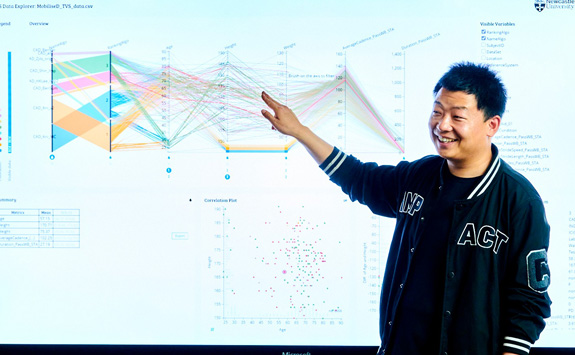

Fulong from China
Computer Science PhD
I chose Â鶹´«Ã½ because of its strong research profile in machine learning and the opportunity to work with leading academics.
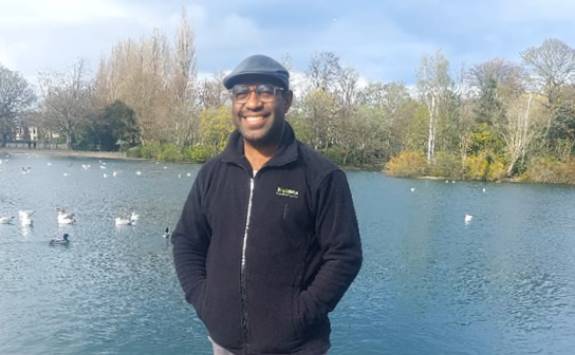

Ishak from Indonesia
Computer Science PhD
The support I received from the beginning was very positive, which helped confirm my decision to apply.
What you'll learn
Research supervision is available under our seven research areas:
- Advanced Model-Based Engineering and Reasoning (AMBER)
- Open Lab
- Interdisciplinary Computing and Complex BioSystems (ICOS)
- Scalable Computing
- Secure and Resilient Systems
- Educational Practice in Computing
- Networked and Ubiquitous Systems Engineering (NUSE)
How you'll learn
On starting the programme you'll identify and research an open question before formulating an approach to answering it. After agreeing a topic with your supervisor, you'll conduct a literature review and refine your research goals.
Following your initial research you submit a project proposal. Once your project proposal is approved you will conduct your supervised research and write a thesis. Your thesis is also assessed by an oral examination.
Throughout the course of your research you'll write research papers for conferences and journals.
Depending on your modules, you'll be assessed through a combination of:
- Thesis
- Viva
We offer a wide range of projects for the thesis. These will be provided by our academics. You can also propose your own topic.
The School of Computing has a dedicated Wellbeing Advisor who understands the needs of our students.
They can be a confidential listening ear and provide guidance on a range of wellbeing issues.
Our mission is to help you:
- stay healthy, positive and feeling well
- overcome any challenges you may face during your degree – academic or personal
- get the most out of your postgraduate research experience
- carry out admin and activities essential to progressing through your degree
- understand postgraduate research processes, standards and rules
We can offer you tailored wellbeing support, courses and activities.
You can also access a broad range of workshops covering:
- research and professional skills
- careers support
- wellbeing
- health and safety
- public engagement
- academic development
Find out more about our postgraduate research student support
Our academic staff have international reputations for their contributions to the field. Some have extensive experience as practitioners in industry.
Your development
Faculty of Science, Agriculture and Engineering (SAgE) researcher development programme
Each faculty offers a researcher development programme for its postgraduate research students. We have designed your programme to help you:
- perform better as a researcher
- boost your career prospects
- broaden your impact
Through workshops and activities, it will build your transferable skills and increase your confidence.
You’ll cover:
- techniques for effective research
- methods for better collaborative working
- essential professional standards and requirements
Your programme is flexible. You can adapt it to meet your changing needs as you progress through your doctorate.
Doctoral training and partnerships
There are opportunities to undertake your PhD at Â鶹´«Ã½ within a:
- Centre for Doctoral Training (CDT)
- Doctoral Training Partnership (DTP) / Doctoral Landscape Award (DLA)
Being part of a CDT or DTP/DLA has many benefits:
- They combine research expertise and training of a number of leading universities, academic schools and academics.
- You’ll study alongside a cohort of other PhD students.
- They’re often interdisciplinary.
- Your PhD may be funded.
If there are currently opportunities available in your subject area you’ll find them when you search for funding in the fees and funding section on this course.
The following centres/partnerships below may have PhD opportunities available in your subject area in the future:
Entry requirements
The entrance requirements below apply to 2026 entry.
Qualifications from outside the UK
English Language requirements
Admissions policy
This policy applies to all undergraduate and postgraduate admissions at Â鶹´«Ã½. It is intended to provide information about our admissions policies and procedures to applicants and potential applicants, to their advisors and family members, and to staff of the University.
University Admissions Policy and related policies and procedures
Credit transfer and Recognition of Prior Learning
Recognition of Prior Learning (RPL) can allow you to convert existing relevant university-level knowledge, skills and experience into credits towards a qualification. Find out more about the RPL policy which may apply to this course
Your future
Your career
Our PhD graduates have pursued successful careers across academia and industry.
Graduates roles in industry include:
- Software Developer, Acumatica Labs Montreal
- Project Manager, Center Denmark
- Deoxy Ribonucleic Acid (DNA) Scientist, FabricNano
- Senior Data Scientist, PA Consulting
- Machine Software Engineer, Samsung Research
- Senior Generalist Programmer, Ubisoft Reflections
- Head of Penetration Testing, Pragma Strategy
- Software Engineer, Red Hat
Graduates roles in academia include:
- Assistant Professor, Durham University
- Edge Solution Specialist, Â鶹´«Ã½
- Assistant Professor, University of Birmingham
- Research Associate, University of Oxford
- Research Fellow, Monah University
- Postdoctoral Researcher, Polytechnic University of Valencia
- Research Fellow, University College London
- Postdoctoral Research Associate, University of Cambridge
- Senior Lecturer, York St John University
Our Careers Service
Our expert Careers Service is here to help you take the next steps in your professional life. We will support you while you’re studying with us and for up to three years after you graduate.
You will have access to expert one-to-one advice and guidance through our campus careers centre and online, along with digital resources, workshops, networking opportunities, and careers and recruitment events.
We’ve been awarded 5 QS Stars for Student Employability (2025). Many of our degrees are shaped by strong links with national and international businesses. We are committed to helping you access real-world experience opportunities and develop key skills through paid work placements and internships.
Facilities
Urban Sciences Building
The School of Computing is based in the £58 million Urban Sciences Building (USB), a flagship development located on the £350 million Â鶹´«Ã½ Helix regeneration site in the heart of Â鶹´«Ã½. It brings together:
- academia
- the public sector
- communities
- business and industry
Postgraduate student facilities
As a Master's student, you'll have access to specialist teaching spaces and facilities in the USB. These are only available to postgraduate students.
Wellbeing and inclusivity are at the heart of our School. The USB has several wellbeing spaces for students, including a prayer room for all faiths and none. This space can be used for prayer or quiet reflection.
Fees, Funding and Scholarships
Tuition fees for 2026 entry (per year)
We are unable to give an exact fee, this is why the fee is shown as a range. This fee range takes into account your research topic and resource requirements.
Your research topic is unique so it will have unique resource requirements. Resources could include specialist equipment, such as laboratory/workshop access, or technical staff.
If your research involves accessing specialist resources then you're likely to pay a higher fee. You'll discuss the exact nature of your research project with your supervisor(s). You'll find out the fee in your offer letter.
For 2026-27 entry, we've aligned our standard Home research fees with those set by . For 2027-28 entry, we will again be aligning our standard Home research fees with UKRI. They will announce their fees in Spring 2027.
As a general principle, you should expect the tuition fee to increase in each subsequent academic year of your course, subject to government regulations on fee increases and in line with inflation.
Depending on your residency history, if you’re a student from the EU, other EEA or a Swiss national, with settled or pre-settled status under the EU Settlement Scheme, you’ll normally pay the ‘Home’ tuition fee rate and may be eligible for Student Finance England support.
EU students without settled or pre-settled status will normally be charged fees at the ‘International’ rate and will not be eligible for Student Finance England support. You may be eligible for a scholarship worth 25% off the international fee. Search our funding database.
Scholarships
We support our EU and international students by providing a generous range of Vice-Chancellor's automatic and merit-based scholarships. See our searchable postgraduate funding page for more information.
Search for funding and scholarships
Find funding available for your course
What you're paying for
Tuition fees include the costs of:
- matriculation
- registration
- tuition (or supervision)
- library access
- examination
- re-examination
- graduation
Find out more about:
If you are an international student or a student from the EU, EEA or Switzerland and you need a visa to study in the UK, you may have to pay a deposit.
You can check this in the How to apply section.
If you're applying for funding, always check the funding application deadline. This deadline may be earlier than the application deadline for your course.
For some funding schemes, you need to have received an offer of a place on a course before you can apply for the funding.
How to apply
Using the application portal
The application portal has instructions to guide you through your application. It will tell you what documents you need and how to upload them.
You can choose to start your application, save your details and come back to complete it later.
If you’re ready, you can select Apply Online and you’ll be taken directly to the application portal.
Alternatively you can find out more about applying on our applications and offers pages.
Open days and events
Find out about how you can visit Â鶹´«Ã½ in person and virtually
Overseas events
We regularly travel overseas to meet with students interested in studying at Â鶹´«Ã½.
Get in touch
Questions about this course?
If you have specific questions about this course you can contact:
Admissions Team
Telephone: +44 (0) 191 208 2736
Email: computing.pgradmin@newcastle.ac.uk
School of Computing
ncl.ac.uk/computing
Enquiries
If you've got a question about your application, send us an enquiry via the application portal you applied through.
If you haven't applied yet, or have a general enquiry, you can send your questions via our enquiry form.
Chat to our students
Choosing a university is a big decision. If you've got questions about a particular course, student life or the city of Â鶹´«Ã½, why not chat to our friendly students or graduates!
Keep updated
We regularly send email updates and extra information about the University.
Receive regular updates by email
Social media
Get involved with the School of Computing social media